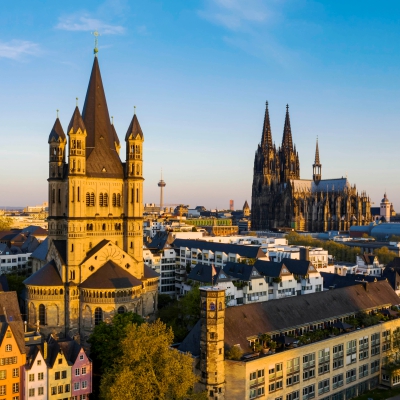
 Cologne (Köln in German) is one of Germany’s oldest and most culturally vibrant cities, uniquely blending Roman history, medieval architecture, and modern innovation. Located in the western part of the country along the majestic Rhine River, Cologne is the fourth-largest city in Germany and an influential educational and economic hub. It’s not only a center of academic achievement but also a dynamic metropolis known for its arts, culture, and international community—making it a compelling choice for international students seeking quality education in a lively, student-friendly environment.
The city is home to several well-respected universities, the most prominent being the University of Cologne (Universität zu Köln), one of the oldest and largest universities in Europe. Founded in 1388, the University of Cologne is renowned for its academic excellence, particularly in fields like economics, social sciences, law, natural sciences, and humanities. In addition, Cologne University of Applied Sciences (TH Köln) is highly regarded for its innovative, hands-on approach to teaching in engineering, media, technology, and design.
Cologne’s universities attract thousands of international students each year by offering a diverse range of academic programs, many of which are taught in English at the master’s and doctoral levels. Students benefit from an interdisciplinary approach, cutting-edge research facilities, and strong ties between academia and industry. Whether pursuing business, science, technology, or the arts, students are encouraged to think globally, work collaboratively, and solve real-world problems.
What makes Cologne particularly appealing for international students is its welcoming atmosphere and multicultural environment. Over 120,000 students study in Cologne, giving the city a youthful, energetic feel. The student community is diverse, and universities provide excellent support systems—including language courses, international offices, career services, and cultural integration programs—to ensure that students feel at home. The cost of studying in Cologne is also favorable. Like elsewhere in Germany, public universities typically do not charge tuition fees, even for international students. Semester contributions are minimal and often include a semester ticket for unlimited public transport across the region.
Living in Cologne is a unique experience. Known for its open-mindedness and tolerance, Cologne has long been regarded as one of Germany’s most liberal and inclusive cities. The locals are friendly, the public transport system is efficient, and student housing options are accessible. The city’s location in the heart of Europe also makes it easy to travel to nearby cities like Brussels, Amsterdam, and Paris.
Culturally, Cologne offers a rich tapestry of experiences. It is famous for the Cologne Cathedral (Kölner Dom)—a UNESCO World Heritage Site and one of the largest Gothic churches in Europe. The city is a major center for media, art, music, and design, with numerous museums, art galleries, film festivals, and exhibitions throughout the year. Students can enjoy a vibrant nightlife, riverside cafés, music venues, and the annual Cologne Carnival, one of Europe’s biggest street festivals.
Cologne is also a growing economic and business powerhouse. It is home to major companies in automotive, insurance, media, telecommunications, and logistics sectors. The presence of such industries offers students excellent prospects for internships, research partnerships, and post-graduate employment. In fact, universities often collaborate with local firms to provide career-oriented training and workshops.
Furthermore, Germany’s post-study work visa policies allow students to remain in the country for up to 18 months after graduation to seek employment. Cologne’s balanced blend of opportunities, affordability, and quality of life makes it an ideal launchpad for academic and professional success.